
Preventing falls at home: the most effective adaptations for a safe home

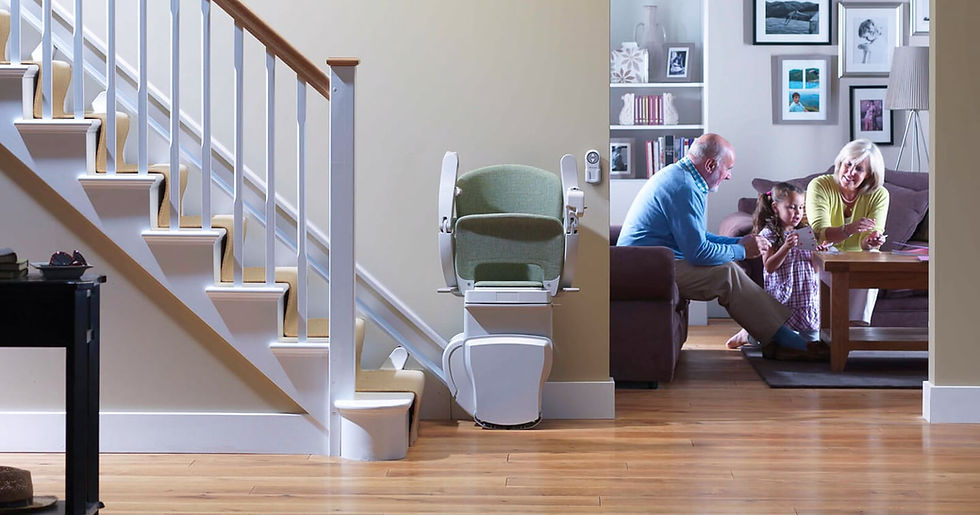
Falls at home are a leading cause of injury among the elderly and people with reduced mobility. They can have significant consequences: loss of independence, hospitalization, fear of moving around, and a diminished quality of life. Yet, the majority of falls can be prevented with simple and well-considered adaptations.
In this article, we present the most effective adaptations to prevent falls at home , while promoting safety, comfort and independence.
Why do falls happen at home?
Falls are not always linked to a sudden event. They often result from a combination of factors, such as:
a decrease in balance or muscle strength;
reduced mobility or increased fatigue;
slippery or uneven surfaces;
insufficient lighting;
obstacles in the passage areas.
Over time, certain habits become risky, especially when the home is no longer perfectly suited to the physical capabilities of its occupants.
Stairs: a high-risk area
Stairs are among the most dangerous places in the house. Going up or down stairs requires coordination, balance, and strength.
Effective adaptations for stairs
installation of a stair seat to eliminate the risk of falling;
addition of sturdy and well-positioned handrails;
improved lighting;
anti-slip coatings on the steps.
These solutions make it possible to secure a space that is often essential in a multi-story house.
Improve accessibility between levels
When stairs become too risky, vertical mobility solutions can effectively prevent falls.
Solutions to consider
lifting platform for people with reduced mobility or in wheelchairs;
Residential elevator for comfortable and safe travel between floors.
These devices completely eliminate the risk associated with stairs and promote smooth circulation throughout the house.
Securing the bathroom
The bathroom is one of the rooms where falls are most frequent. Humidity, smooth surfaces, and repetitive movements increase the risks.
Key adaptations
grab bars near the toilet, bath and shower;
shower without threshold or non-slip surface;
shower seat;
raised toilet or toilet with armrests.
These adjustments significantly improve stability and reduce the risk of accidents.
Reduce obstacles in traffic areas
Daily movement within the home must be unimpeded.
Best practices
clear the corridors and passageways;
remove slippery or loose rugs;
arrange the furniture to allow for smooth movement;
adjust the height of the furniture and storage units.
A clear environment facilitates movement and reduces the risk of missteps.
Improve the lighting
Inadequate lighting is often underestimated when it comes to fall prevention.
Priority areas
stairs ;
inputs and outputs;
corridors;
bathroom.
Uniform and well-positioned lighting improves visibility and helps to better anticipate obstacles.
Make it easier to open the doors
Heavy or difficult-to-maneuver doors can cause loss of balance, especially when forcing or bending over.
Effective solution
Installation of an automatic door opener , which allows a door to be opened and closed effortlessly.
This solution reduces risky handling and improves overall home accessibility.
Think about long-term prevention
Preventing falls is not just about meeting an immediate need; it's also about anticipating changes in mobility . A well-thought-out adaptation today can prevent dangerous situations tomorrow.
Anticipating allows you to:
to maintain its autonomy for longer;
to avoid emergency interventions;
to reduce stress for the occupants and their loved ones.
Possible financial assistance
Certain adaptations aimed at preventing falls may be eligible for financial assistance , particularly within the framework of home adaptation programs or depending on the situation of the person concerned.
It is important to check eligibility before starting work in order to maximize opportunities for financial support.
The importance of a professional evaluation
Every home and every situation is unique. A professional assessment allows you to:
to identify at-risk areas;
to recommend suitable solutions;
to prioritize the most effective interventions.
Personalized support ensures that the adaptations put in place truly meet daily needs.
Preventing falls at home relies on a combination of simple adaptations and more structural solutions. By securing stairs, bathrooms, walkways, and access points, it's possible to create a safer and more reassuring environment. A well-adapted home is one that protects, supports, and promotes independence in daily life.
Do you want to reduce the risk of falls at home? Contact Mobilatec Elevators for a personalized assessment and to discover the solutions and financial assistance available to you based on your situation.


Comments